We’ve all been there: you find a “healthy” dessert recipe, but the ingredient list calls for a sweetener you’ve never used, or worse, one that leaves a bitter aftertaste.
If you’re looking to ditch refined sugar without sacrificing your favorite treats, you’re in the right place. In this guide, we’re breaking down the science of natural sugar substitutes, comparing the heavy hitters like Monk Fruit vs. Stevia, and giving you a cheat sheet for perfect conversions.
Why Make the Switch?
Refined white sugar provides “empty” calories and causes rapid blood sugar spikes. By choosing natural sugar substitutes, you can enjoy desserts that offer more stable energy. According to the Cleveland Clinic, certain natural alternatives have a much lower impact on insulin levels, making them a safer choice for long-term health.
The Zero-Calorie Heavyweights: Monk Fruit vs. Stevia
If you are looking for the best keto sweetener with no aftertaste, these two are likely at the top of your list. But they are not created equal.
Monk Fruit (Luo Han Guo)
- The Pros: It has a very clean taste that is remarkably close to sugar. It is heat-stable, making it arguably the best natural sweetener for baking cookies.
- The Cons: It’s often blended with erythritol to make it a 1:1 swap for sugar.
- Safety: Monk fruit is Generally Recognized as Safe (GRAS) by the FDA.
Stevia
- The Pros: Highly accessible and very affordable. Great for liquids.
- The Cons: Why does stevia taste bitter in cakes? Stevia contains compounds called steviosides that can leave a metallic or licorice-like aftertaste when heated.
- Verdict: Use Monk Fruit for baking; save Stevia for your morning coffee or smoothies.
Put it into Practice: Try This No-Bake Recipe!
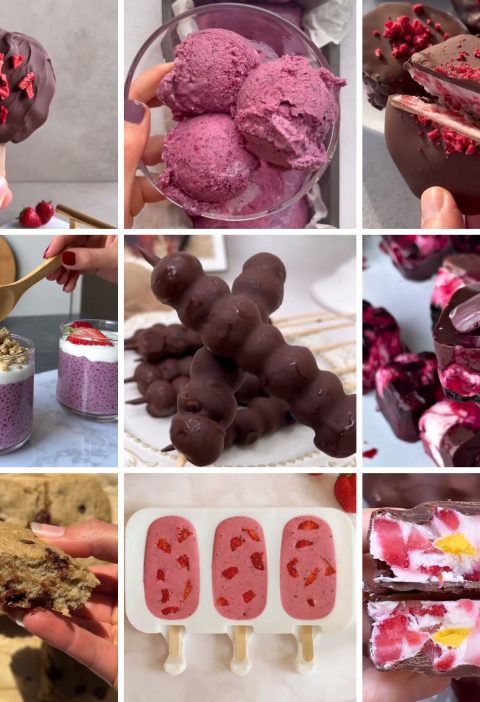
Looking for a way to use liquid stevia without that bitter “baked” aftertaste? These Irresistible Frozen Yogurt Dessert Bites are the perfect example of how natural sweeteners shine in chilled treats. They are creamy, high-protein, and satisfy that sweet craving with zero refined sugar.
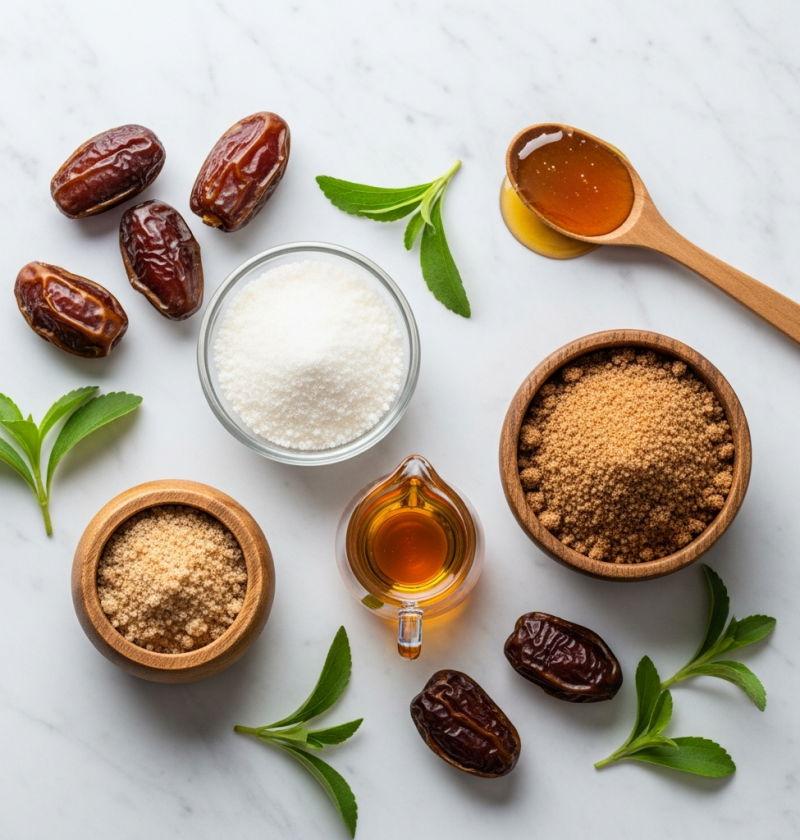
Liquid Gold: Honey, Maple Syrup, and Date Paste
For those who prefer “whole-food” sweeteners, liquid options add moisture and depth of flavor.
- Maple Syrup: Best for a classic “baked goods” flavor. It contains manganese and zinc, offering more nutritional value than table sugar.
- Honey: Great for chewy textures, but remember: honey is sweeter than sugar!
- Date Paste: If you want the best natural sweetener for diabetics, date paste is a winner because it contains fiber, which slows down sugar absorption and prevents sharp glucose spikes.
Pro Tip: If you’re wondering how to replace honey with maple syrup, you can usually do a 1:1 swap, but keep in mind that honey is thicker and will result in a slightly more “tacky” texture.
The New Kid on the Block: Allulose
If you haven’t heard of Allulose, it’s a “rare sugar” naturally found in figs and raisins.
- Why it’s trending: Unlike Stevia or Monk Fruit, Allulose browns and caramelizes exactly like real sugar.
- Health Fact: Research suggests that Allulose has minimal impact on blood glucose or insulin levels.
Quick Conversion Cheat Sheet
Disclaimer: Brands vary. Always check the packaging for specific ratios.
| Sweetener | Ratio to 1 Cup White Sugar | Best Used For |
| Monk Fruit (Granulated) | 1:1 | Cookies, Cakes, Muffins |
| Coconut Sugar | 1:1 | Brownies (adds a caramel flavor) |
| Honey / Maple Syrup | 3/4 Cup | Quick breads, Glazes |
| Liquid Stevia | 1 teaspoon | Smoothies, No-bake treats |
| Allulose | 1 1/3 Cup | Soft cookies, Chewy bars |
Tips for Success with Natural Sweeteners
- Don’t Over-bake: Natural sweeteners (especially honey and coconut sugar) tend to brown faster than white sugar. Lower your oven by 25°F (approx. 10°C) if things are browning too quickly.
- Check for “Bulk”: If you use a concentrated sweetener (like pure Stevia powder), you lose the “bulk” that sugar provides. You may need to add more flour or applesauce to keep the texture right.
- Mix Your Sweeteners: Many professional healthy bakers use a “blend” (like a little maple syrup mixed with a little monk fruit) to create a more complex flavor and better texture.
Final Thoughts
There is no single “perfect” sweetener—only the best one for your specific recipe. If you want a clean, sugar-like taste, reach for Monk Fruit. If you want a deep, rich flavor, go for Maple Syrup or Coconut Sugar.
What is your favorite natural sweetener to bake with? Let me know in the comments below!nd a Pinterest pin description to help you promote this new post?